


Learn how motor load data is linked to the feeder command and what is assessed for this control on an existing line.
The motor load may change as the amount of material fed to a crusher changes. Motor current is one of the signals used to monitor that load. Automation can link the measurement to the feeder’s operating command. How this relationship is configured depends on the crusher, feeder, measurement infrastructure and line operating conditions.
What does motor current indicate?
Motor current helps assess load changes during operation. However, the same current value does not represent the same operating condition for every crusher. Motor ratings, no-load and loaded behaviour, the starting system and manufacturer limits are examined together.
A rise in current alone does not explain the cause of a problem. Material characteristics or mechanical operating conditions may have changed alongside the feed rate. Viewing load on screen and identifying the cause of a stop therefore require separate assessments.
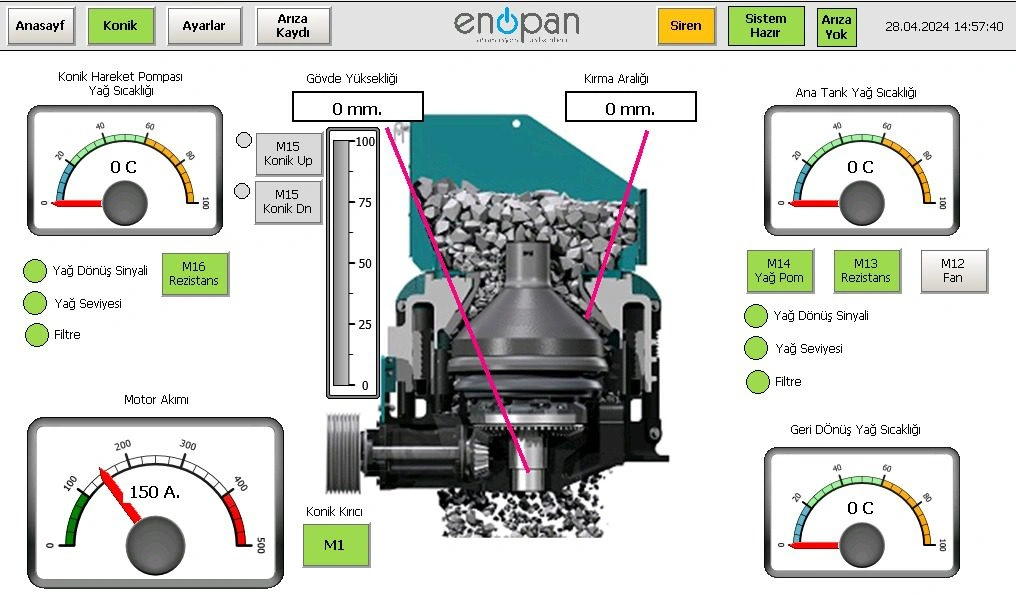
How does measurement data reach the PLC?
Depending on the system, current data may come from a measuring device or data available from a drive. The initial review establishes the measurement source, how it reaches the control system and how the measurement range maps to the displayed value. Existing panels are not assumed to provide the same data.
Measurement updates and validity are also part of control. The project should define feeder behaviour if communication is lost or the measurement becomes invalid. A value remaining on screen may not mean current field data is being received.
What adjustments can be made to the feeder?
Some feeders can be controlled by speed commands; other systems may only offer run and stop commands. The commands automation can issue depend on the existing feeder and control hardware. Continuous speed regulation based on motor current and stopping feed under a defined condition involve different control scopes.
The control sequence explains how feed is reduced as load changes, the conditions for increasing it again and the permitted adjustment ranges. These settings are assessed alongside on-site behaviour. Directly copying current or timing values from another plant is not an appropriate starting point.
Feed control and motor protection are assessed together
Adjusting feed according to motor load manages process operation. Protection functions required for the motor and crusher are assessed against the equipment’s own requirements. Feed control does not replace existing protection and safety functions.
For example, whether the feeder is permitted to run while the crusher is not ready is a separate control sequence issue. Which feeding equipment is affected by a crusher fault is determined alongside the other line units. This defines plant operating relationships beyond control based only on current.
What information should the operator screen show?
Operators need to understand why the feeder slowed or stopped as well as see the measured current. Current, active operating mode, feeder command and missing permissives can be assessed together. Displayed information is selected according to signals available from existing devices.
- Crusher motor current and measurement validity.
- Feeder manual or automatic operating status.
- Issued speed or run command and available feedback.
- Load-based limitation or waiting for another operating permissive.
What information is needed for an existing line upgrade?
Crusher and feeder labels, drive models where applicable, existing PLC/HMI details and panel photographs are useful starting points. Add which material and operating step are involved when the problem occurs. Current, feed and alarm records from the same moment, where available, support the investigation.
Enopan assesses crusher load and feeder control together in crushing and screening plants. The review distinguishes changes achievable through software alone from work requiring measuring devices, drives or panel connections. Checks after implementation use the defined operating sequence and on-site equipment.
Share your crusher and feeder details
Review your existing load monitoring, feeding method and the behaviour you want to change with us. We can define control software and hardware work separately.