


We develop PLC software, HMI/SCADA screens and electrical control panels for pellet presses and industrial drying systems. We design material feeding based on press motor load, and temperature, timing and auxiliary equipment sequences for drying systems, to suit the plant.
Alongside new installations, we upgrade the automation of existing presses, dryers and conveying units. Together, we define the scope of software, control panels, field connections, commissioning and operator training at the start.
Screen and control panel examples from our work
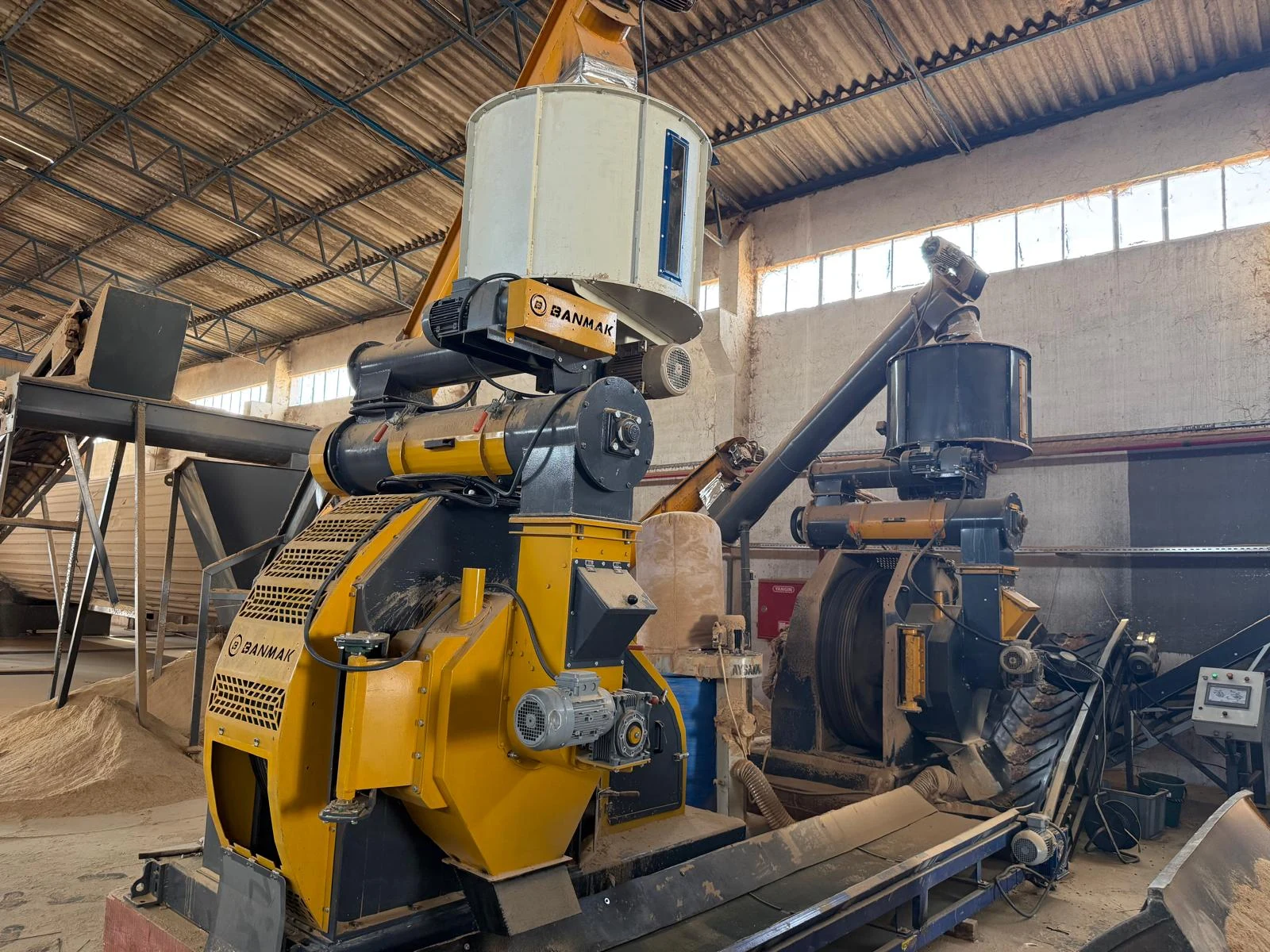
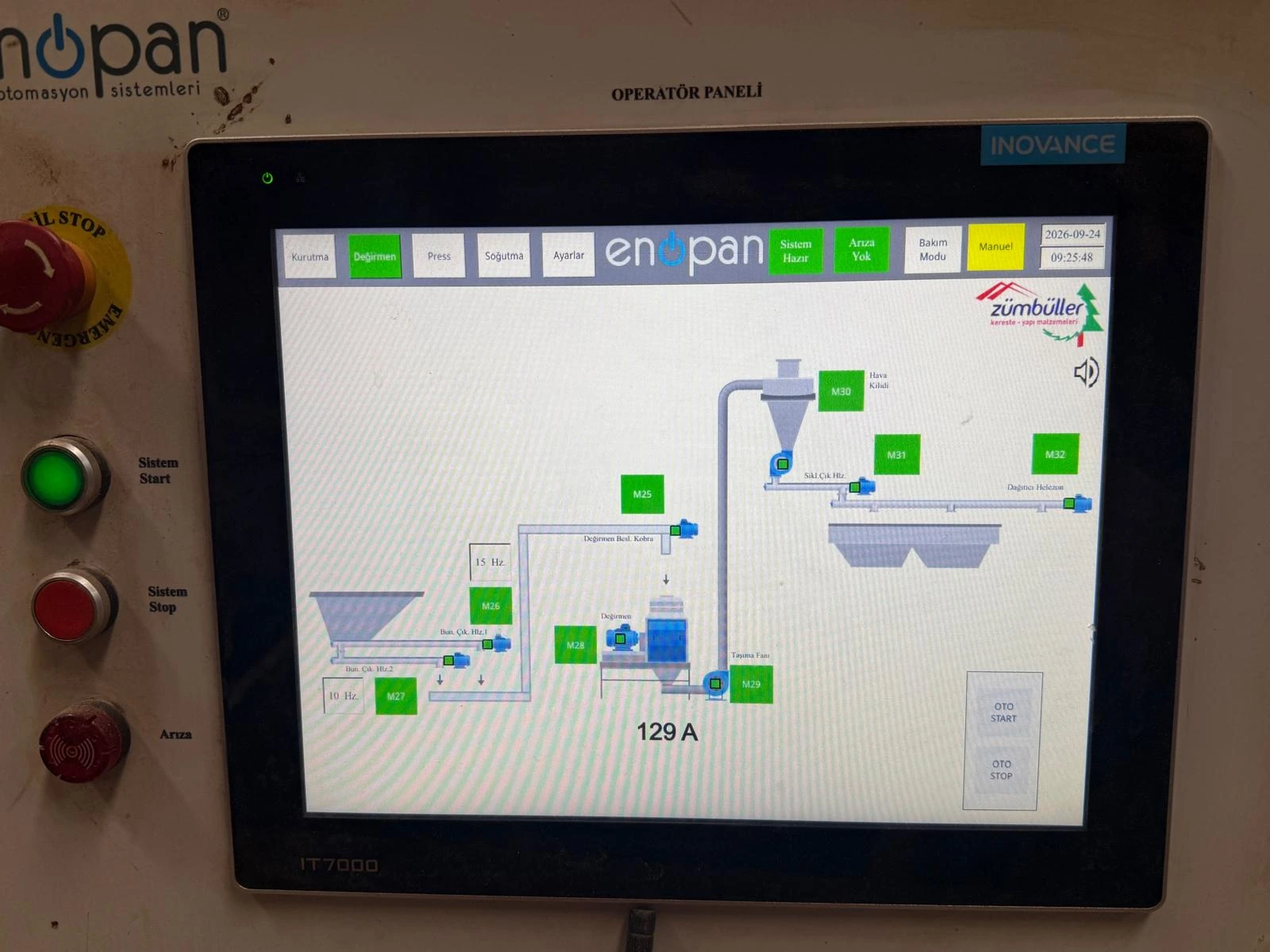
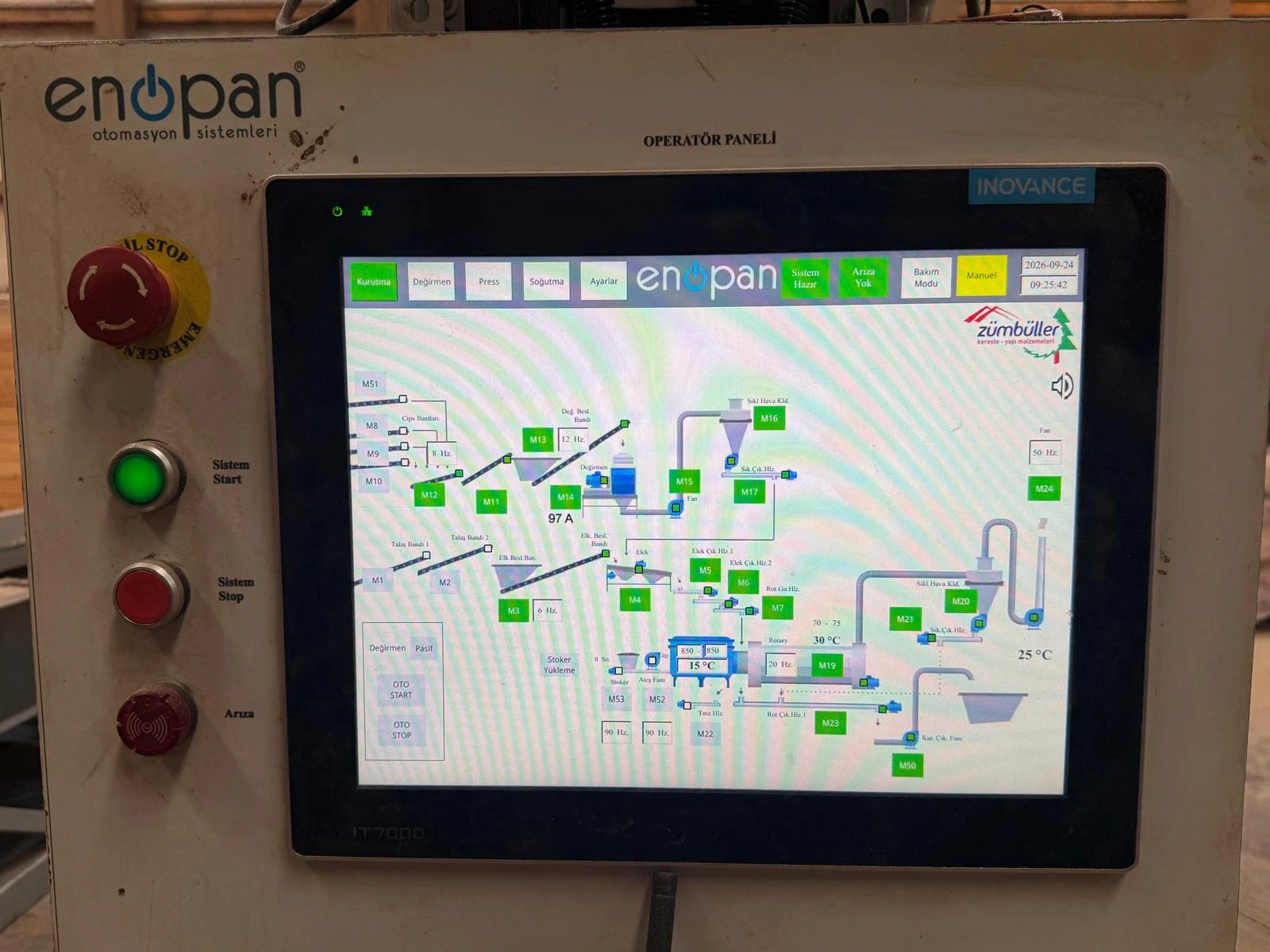
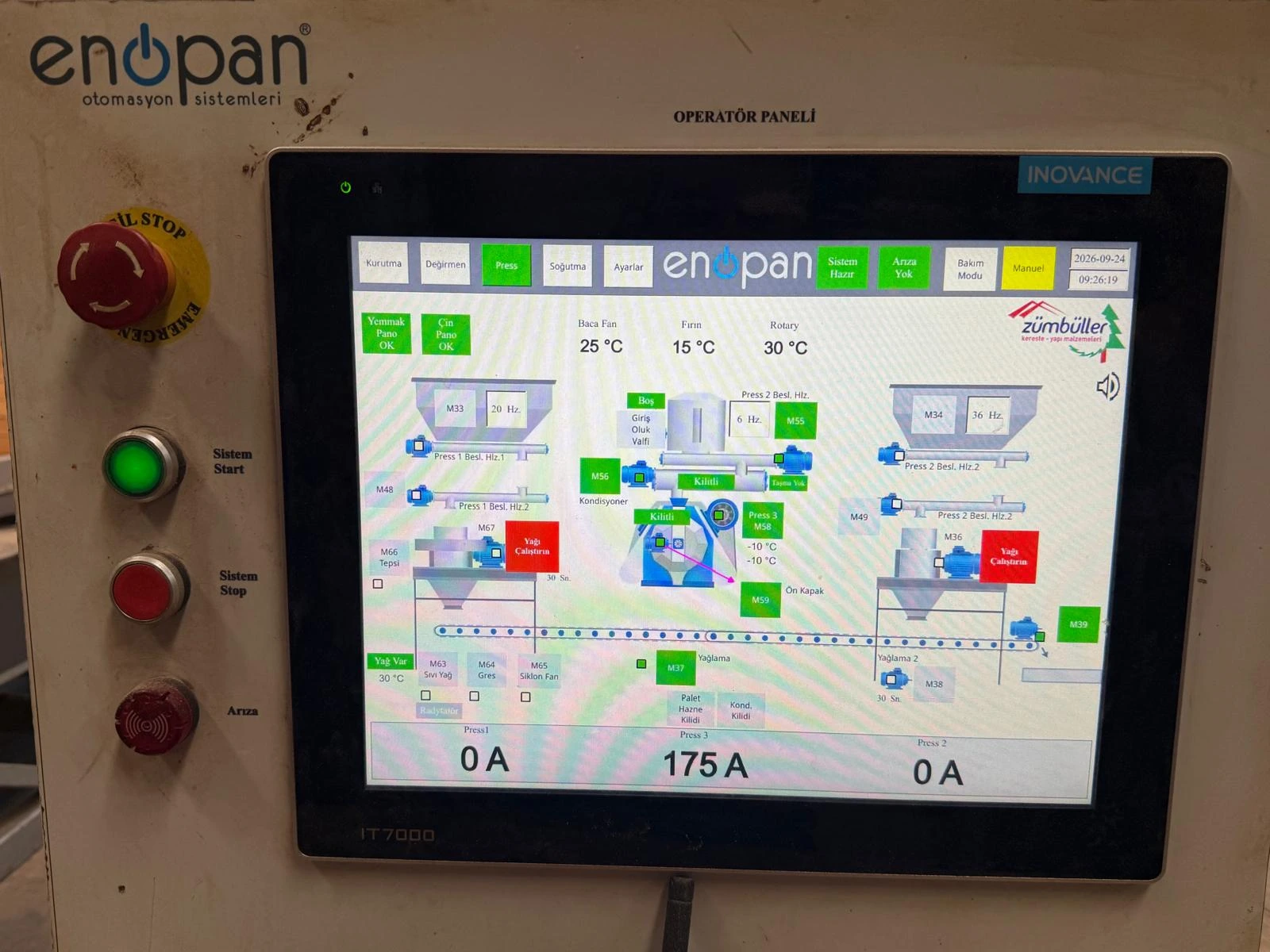
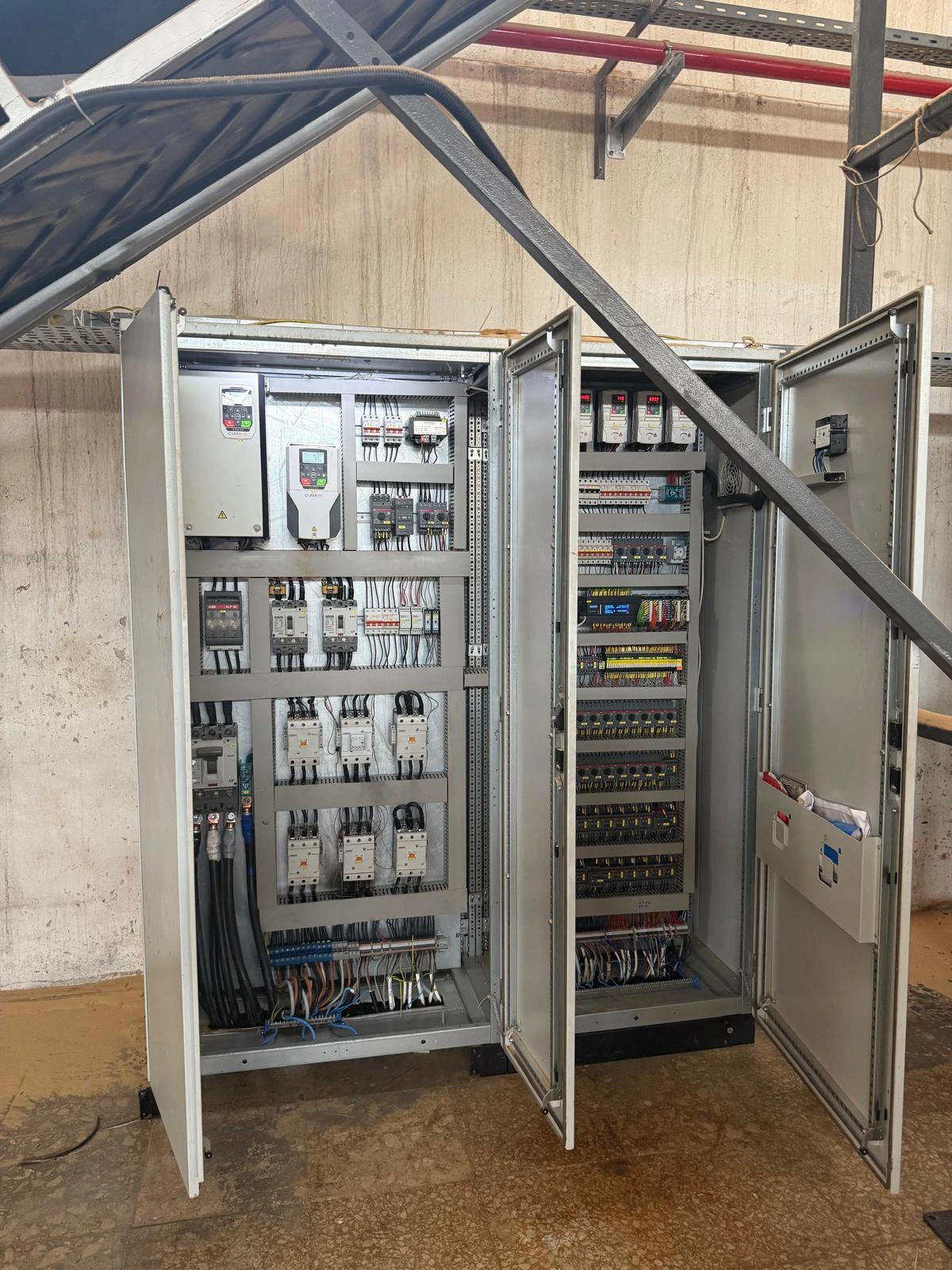
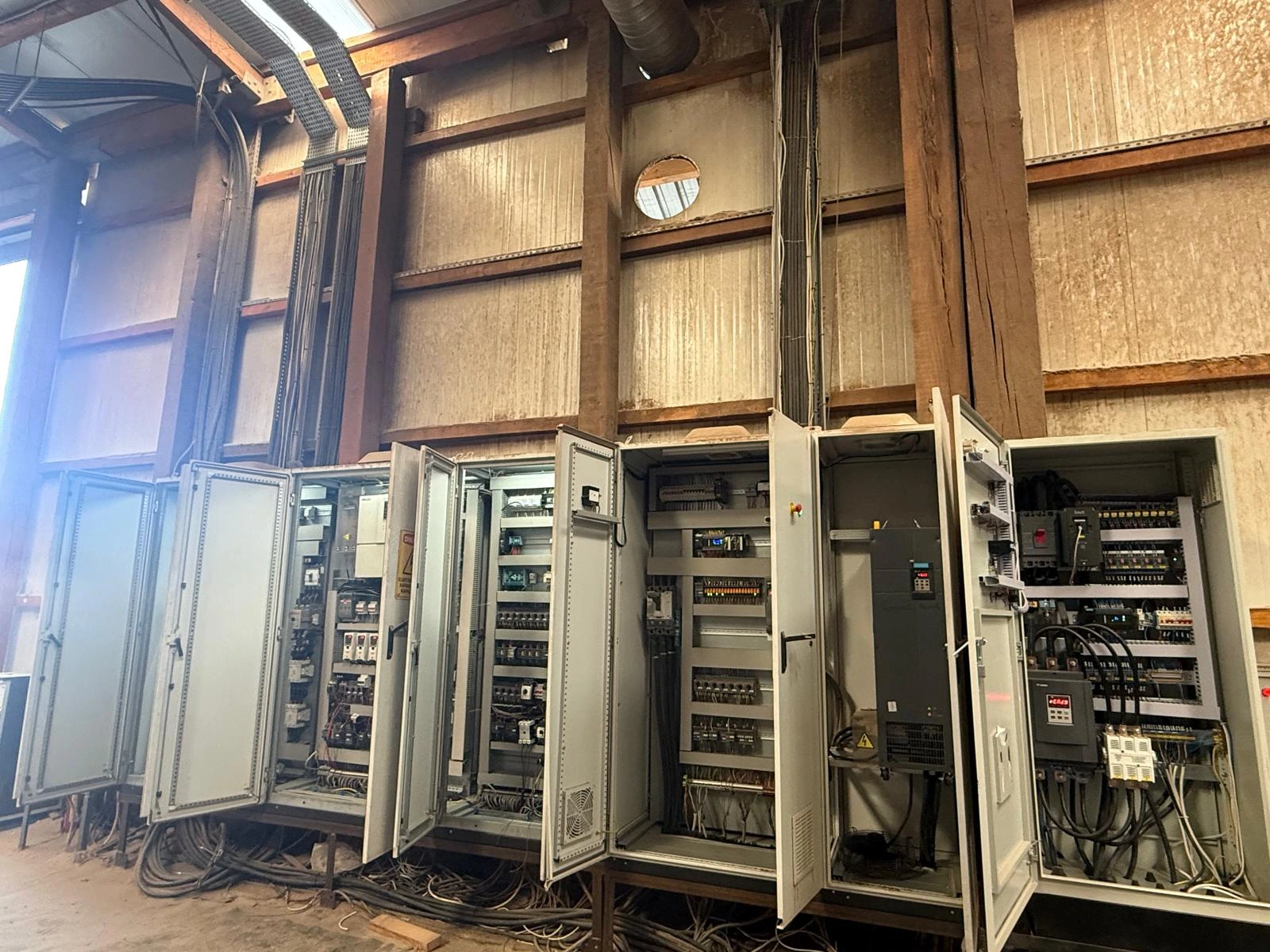
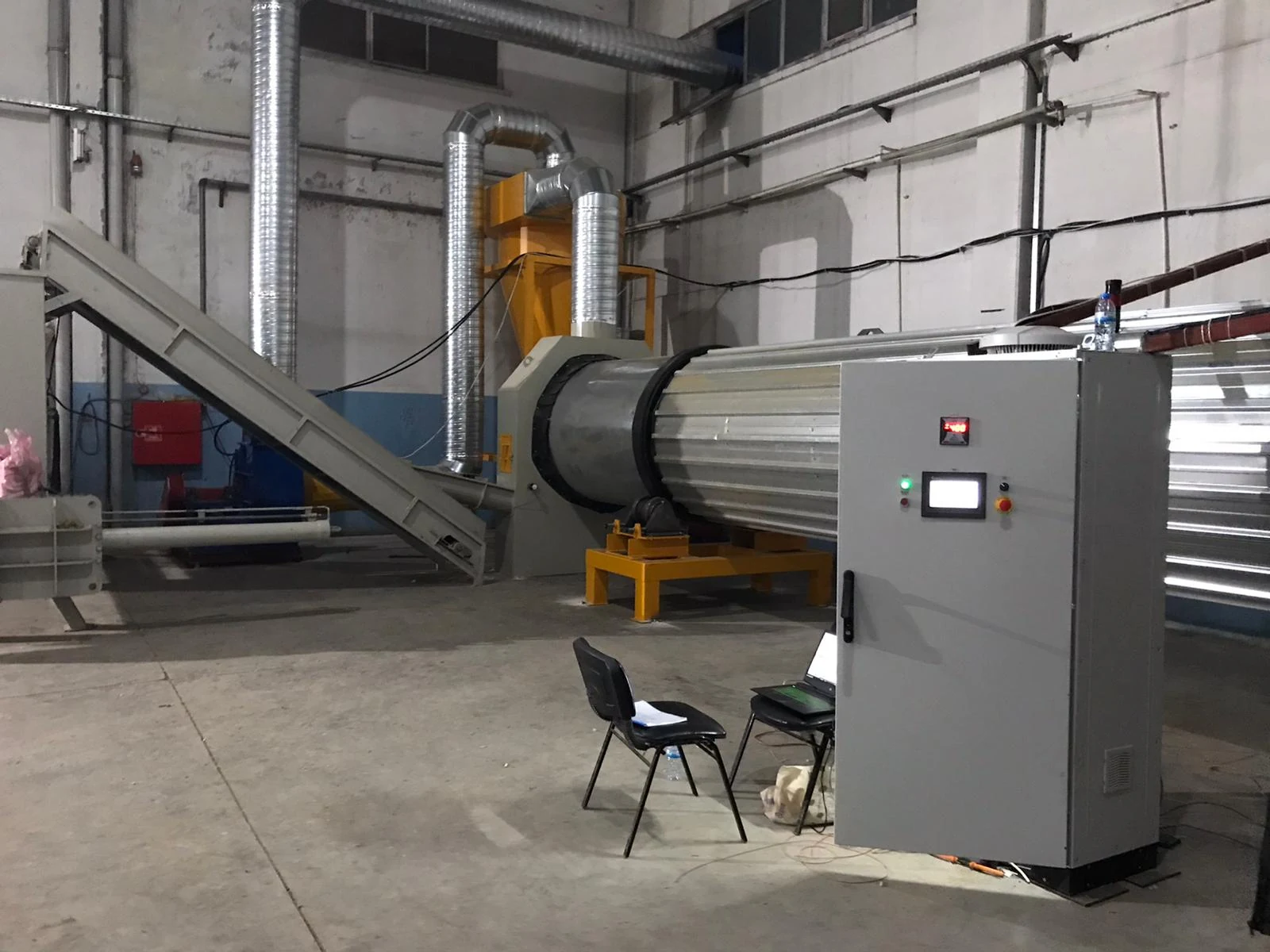
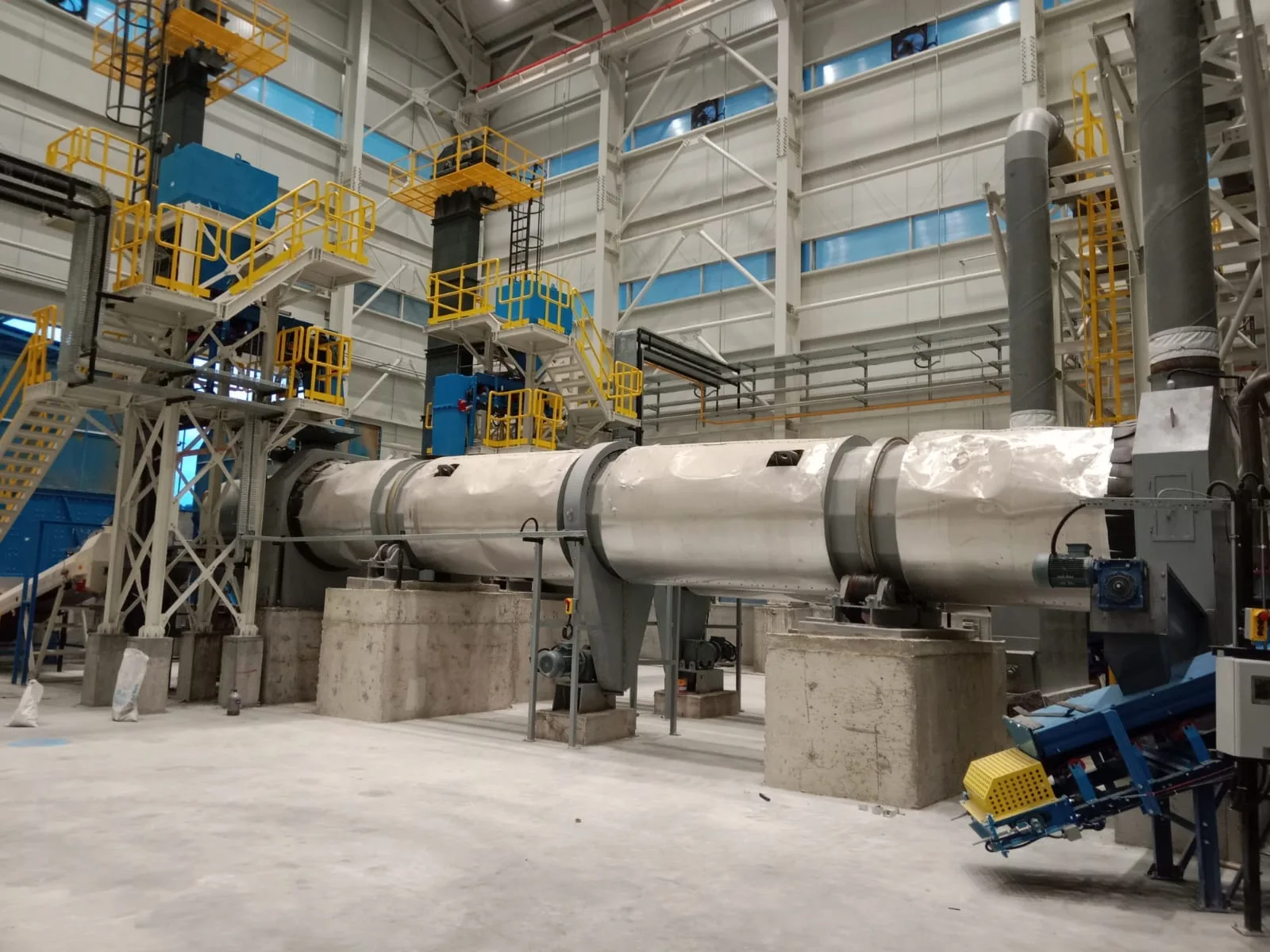
Pellet press automation and feed control
We monitor the current drawn by the press motor and develop PLC software that controls material feeding according to motor load. The operator screen displays motor load, feeding status and the defined operating parameters.
For applications such as wood pellets and animal feed, we determine the control settings according to the press equipment and the material being processed. We assess feeder, fan, temperature monitoring and automatic lubrication functions together with the existing machine.
The control sequence defines the conditions for starting the press, the shutdown sequence and the actions to take in an alarm condition. At the quotation stage, we also assess any need for new mechanical equipment alongside the scope of the automation work.
Industrial drying automation
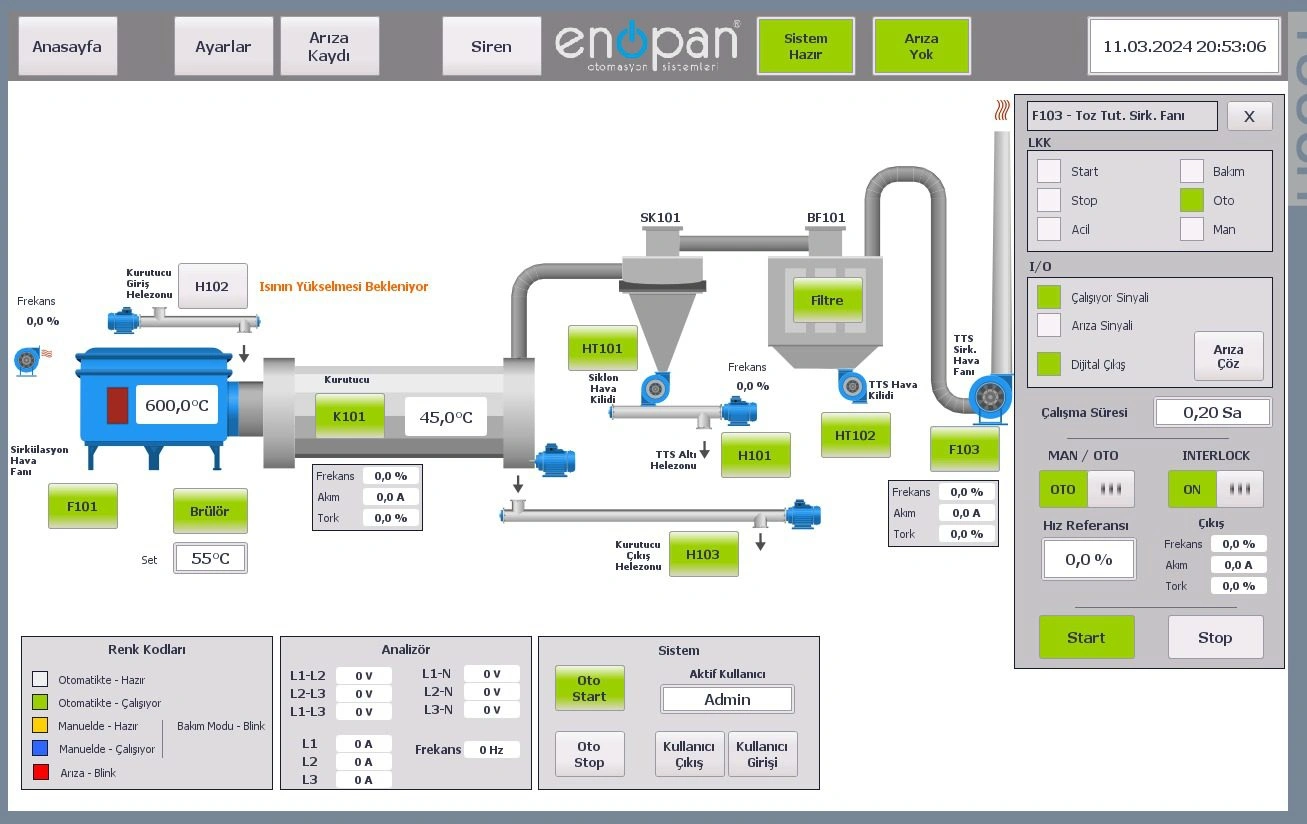
In drying systems, we monitor readings from temperature sensors and make time and temperature settings available on the operator screen. We arrange the operating sequence of the rotary dryer, fans, feeding and discharge equipment according to the plant process.
Sawdust, mineral and chemical raw materials, coal and organic materials require different drying conditions. We determine measurement points, operating parameters and control relationships between equipment according to the material being processed and the dryer design.
Sawdust drying automation
For sawdust drying lines, we address temperature monitoring, operating time, fan control and material transfer together. If the dryer is connected to a pellet production line, we also design its operating relationship with the downstream conveying and pressing units.
Coordinated control of drying, conveying and pressing units
Drying and pressing systems can operate independently or be connected within the same production line. For integrated lines, we define the sequence of feeding, drying, material transfer and pressing according to the equipment connections.
The control sequence specifies how the other equipment will respond if a unit is not ready or raises an alarm. At this stage, we also define which units the operator will monitor and control from a shared screen.
HMI/SCADA screens, alarms and remote monitoring
Operator screens show the process flow, equipment status, motor loads and temperature information. We associate alarm descriptions with the relevant equipment so that the operator can identify the unit responsible for a stop or warning.
We provide remote monitoring, plant control and access to reports from a mobile phone or computer. The data to be displayed, reports and available control functions are defined according to the existing infrastructure.
For remote technical service, when the customer provides internet access, we examine software and fault information through the customer's computer or a remote access device.
Retrofitting existing press and drying automation
Before a retrofit, we assess the existing PLC/HMI information, panel connections, equipment and requested changes. Adjusting feed control, changing dryer settings or updating screens can create different software and hardware requirements.
The scope of work may include:
- Updating PLC software and equipment operating sequences.
- Renewing HMI/SCADA screens and alarm descriptions.
- Integrating motor and drive signals into the control system.
- Checking automation control panels and testing cables.
- On-site commissioning and checking the defined control sequence.
For changes made while a plant is in production, we also discuss the downtime that can be scheduled at the quotation stage.
Engineering and handover scope
We start by defining the plant process, equipment list, measurement points and operator requirements. We use this information to prepare the electrical control panel, PLC software and operator screens.
PLC/HMI program backups, electrical drawings, an operating manual and operator training are included in our standard handover scope. Training covers using the screens, operating parameters and interpreting alarm information.
Frequently asked questions
Can automation be provided for a dryer or press on its own?
We can define a scope of work for a standalone dryer, a press or an interconnected production line. We identify the equipment to be controlled and its connections to the existing system at the start.
Can drying automation be assessed for materials other than sawdust?
We define the automation scope by examining the material being processed, the dryer design, existing measurements and expected operating conditions. Temperature points and control settings are designed for the application.
Can the software be upgraded while retaining the existing panel?
This decision depends on the condition of the PLC, operator screen, panel and field connections. The initial assessment identifies the changes that can be addressed through software and any hardware upgrades required.
Discuss automation for your drying or pressing system
Share the material being processed, the plant location, press or dryer equipment and your requirements for a new installation or retrofit.
Panel photographs, electrical drawings, PLC/HMI model details, a motor and drive list and a description of any existing issues, where available, help us define the technical scope.