


Describe a stoppage more clearly by reviewing the first observed event, affected units and operating conditions over the same time interval.
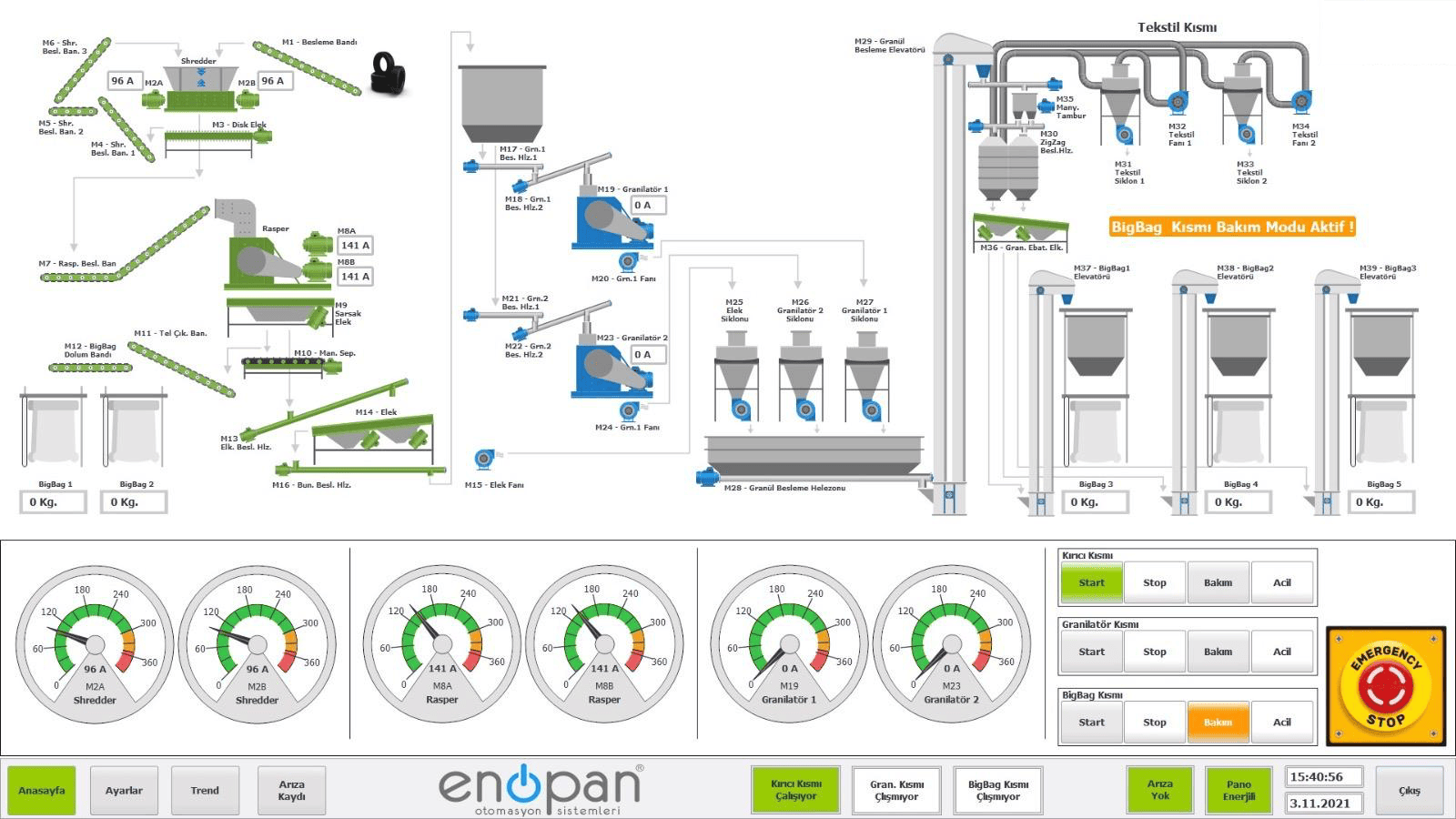
When a unit stops on a tyre recycling line, several alarms may follow. Shredding, separation and conveying equipment operate together, so the last alarm seen may not show the event that started the stoppage. Investigation requires reading the alarm list alongside event timing, equipment status and the line’s operating sequence.
Why can one stoppage generate several alarms?
A fault in a shredding unit may affect the operating permissive of the conveyor feeding it. When the conveyor stops, other units may also show waiting or alarm information. The relationships depend on the plant’s control sequence; all units are not assumed to need the same stopping response.
Consistent unit names on screens and in records help explain the event chain. Naming the equipment and signal received rather than using a general description such as “motor fault” gives investigation a specific starting point. Labels, electrical drawings and operators’ names for equipment can be assessed together.
Event occurrence, clearance and acknowledgement are separate records
The moment an alarm occurs, the moment its condition clears and the moment the operator acknowledges it are separate data. Check which the existing application records. Having alarm history does not establish that all these times or all field signals are stored.
An operator acknowledging an alarm does not mean its cause is resolved or the machine is ready to restart. The investigation clearly identifies which event the record represents. Restart conditions are assessed according to the equipment and defined control sequence.
Does the first record always show the root cause?
Time order is useful initially, but the first visible alarm cannot be treated as the definite cause. Some field data may not be recorded, or device clocks may differ. Firm conclusions should not be drawn without assessing record timestamps and detail.
Where available, examine motor load, run commands, feedback and connected unit status over the same stoppage interval. The operator’s action immediately before the event can also be added. This describes line behaviour at the time rather than a single alarm entry.
How are recurring stoppages compared?
When comparing several stops at the same unit, note material, operating mode and equipment status before the stoppage. If the same alarm occurs under different conditions, include those differences in the technical assessment. Describe a persistent condition separately from one beginning after a particular change.
| Information to add to the record | Contribution to the assessment |
|---|---|
| Event date and time interval | Finding related records together |
| First unit observed to stop | Investigating the start of the event chain |
| Operating mode and commands | Distinguishing operator action from automatic behaviour |
| Available load and alarm information | Comparing the same conditions |
| Latest maintenance or change | Identifying what changed before the event |
What software changes can be considered if records are insufficient?
If necessary events or equipment information are not recorded, improving the recording scope can be discussed. The business’s investigation needs determine what to store, on which events and for how long. The recording structure and report fields are developed together.
Matching alarm descriptions to equipment names and distinguishing stop from waiting reasons may also be part of an upgrade. However, deciding on software changes does not replace the investigation of symptoms requiring mechanical or electrical checks. The existing system determines what is handled in software and what needs on-site work.
To access available system status and alarm records from a phone or computer, Enopan Connect can be considered for remote monitoring. Displayed records and access scope are defined alongside the data supplied by the line.
Prepare an event file for technical assessment
Share the stoppage interval, alarm screenshots, affected units and operator observations together. Link any motor load and production records to the same interval. PLC/HMI models, electrical drawings and recent changes also support the assessment.
At Enopan, we assess unit operating sequences, motor load monitoring and HMI/SCADA alarm descriptions together on tyre recycling lines. We scope renewal of existing software, screens or panel connections from the observed event and available field information.
Review the stoppage with its records
Share the event time, alarm screenshots and affected units. We can define the software, screen and on-site assessment scope for your tyre recycling line.