


Assess the relationship between press motor load and feeder commands, and the information to review in the existing line’s automation.
Raw material feed and motor operating load are assessed together on a pellet press. Press motor current is one of the signals used to monitor this load. Automation aims to define measurements, feeder commands and press operating conditions within the same sequence. Settings are determined according to press design and material.
Why is press load assessed with other information?
Motor current provides information about the press load at that moment, but does not explain why it changed. Raw material feed, material condition and mechanical operating conditions are included in the assessment. The same current is not assumed to represent the same production condition on different presses.
The operator’s description therefore matters. A load change when feed is increased and one beginning while feed stays constant may require different investigations. Record event timing, material information and current settings together.
What information is used for control?
First identify where motor current is obtained and how it reaches the PLC. Also examine whether the feeder is controlled by speed or run/stop commands. Existing drives and field connections determine what commands software can issue.
Press signals such as ready, running and fault are linked to the conditions under which feeding may start. Existing auxiliary functions such as fans, temperature monitoring and lubrication are also assessed within the control sequence. Each unit’s signals and functions are shown in the equipment list.
How is feed adjusted when load changes?
In automatic operation, feeder commands can be linked to defined load data and operating conditions. The project explains how feed is limited as load rises, when it increases again and when it stops. This behaviour is designed around the capabilities of the control hardware used.
Responses to brief measurement changes should also be considered. If commands repeatedly rise and fall, measurement and feed records are examined together. Current, timing or speed values are not copied directly from another press; settings are assessed against the machine’s requirements.
Which information should operators see together?
Displaying motor current and feeder commands in the same operating context is useful. Distinguishing manual and automatic modes helps operators understand whether a command came from their input or automatic control. Adjustable fields and user permissions are defined at the project outset.
| Information | Role in the assessment |
|---|---|
| Motor current | Measurement used to monitor press load |
| Feeder command | Speed or run request issued by the system |
| Operating mode | Distinguishing manual operation from automatic control |
| Waiting or alarm | Why feeding cannot start or is being limited |
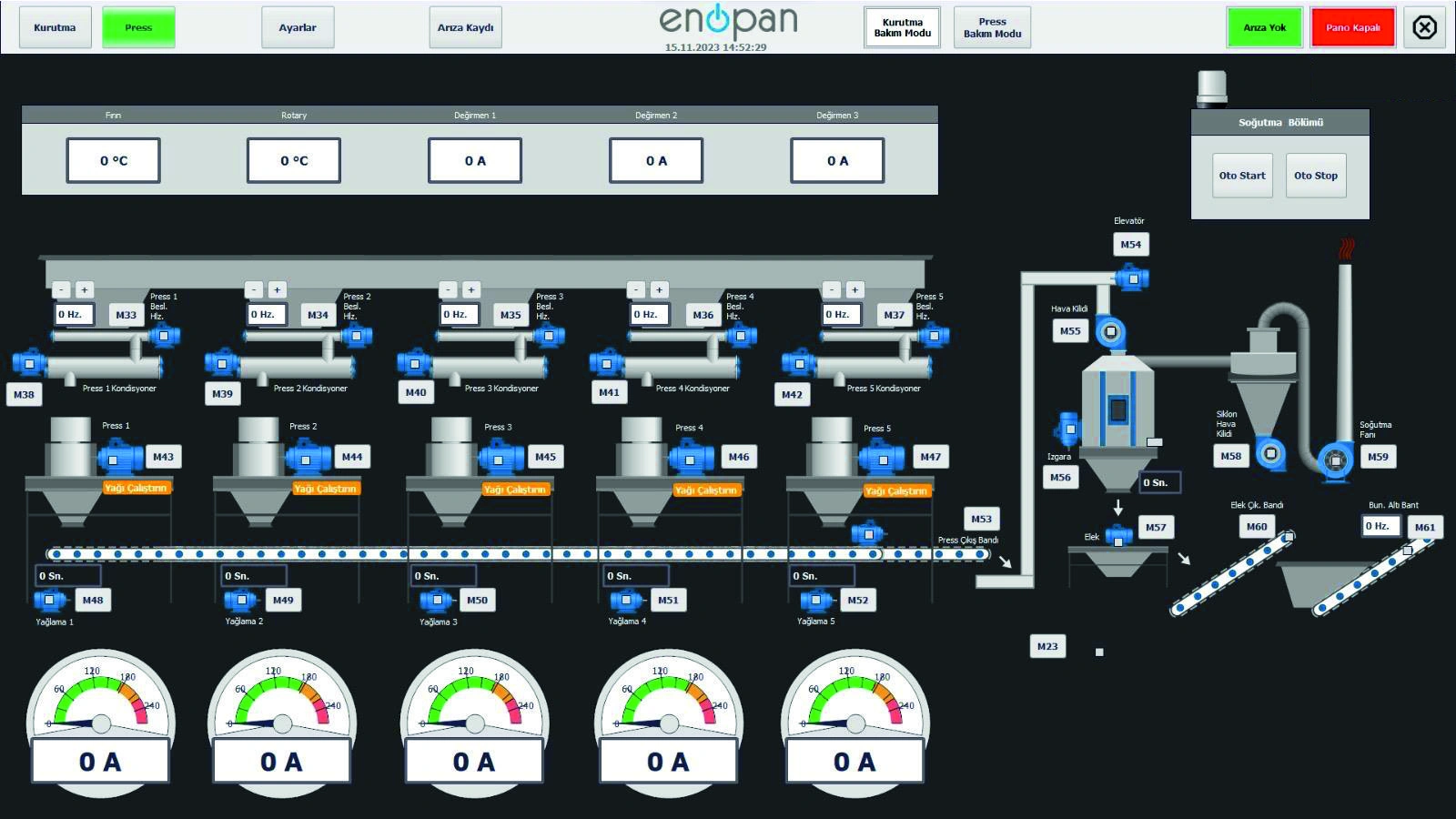
To monitor this information from outside the plant and access controls defined in the project, Enopan Connect can be used. Remote fields and commands are designed alongside PLC operating permissives and user permissions.
How are drying and conveying lines linked?
If the press connects to a drying and conveying line, feeding may depend on more than press status. Material arriving from an upstream unit, intermediate equipment readiness and downstream conveying operation form part of the control relationships. The effect of one unit stopping on others is determined from process flow.
Normal and fault stops for the press are treated as separate scenarios. Load monitoring is designed alongside machine protection functions. An operator viewing or acknowledging an alarm does not mean every system operating condition is satisfied.
How is an existing pellet line upgrade prepared?
Motor and feeder labels, drive models, PLC/HMI details and panel photographs can be prepared for the initial review. State the material used and behaviour you want to change. Share load, feed and alarm records for the same event where available.
At Enopan, we address motor-load-based pellet press feed control, operator screens and connected equipment sequences together. Reviewing the existing system distinguishes software-only adjustments from work requiring changes to measurements, drives or panels. Commissioning and testing scope is defined around this equipment.
Assess your press feed and load monitoring with us
Share details of the press, feeder and existing control system. We can define software, screen and panel upgrade scope around the behaviour you observe.